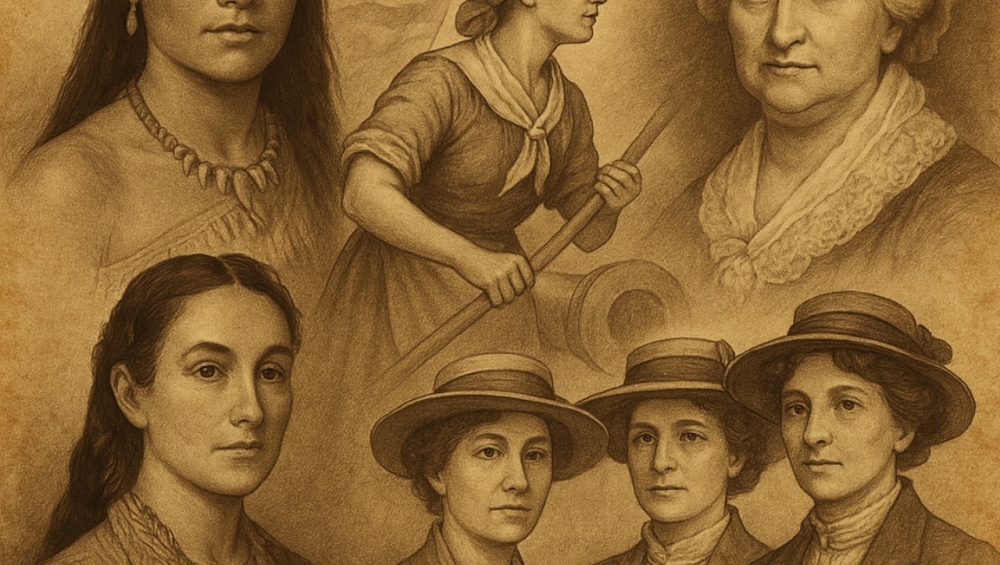
Women Who Love America

Who Are the Mothers of Our Nation?

(Hint: It wasn’t just powdered wigs and white horses 👀)

When we talk about the birth of America, the narrative often leans heavily on powdered-wig patriots and declarations signed by candlelight. But let’s be clear—women were the revolution. They didn’t just support the cause…
📝 They were the cause.

From resistance to resilience, from intelligence to independence, these Founding Mothers laid the moral and cultural foundation for a nation still learning to live up to its ideals.

Here are 8+ legendary women you need to know:

1. Pocahontas
More than a Disney character—Pocahontas (c. 1596–1617) was a Powhatan woman whose diplomacy and cultural exchange with English settlers in Jamestown were pivotal to early colonial survival. She bridged worlds, both literally and symbolically.

2. Phillis Wheatley
The first African American woman to publish a book of poetry (1773), Wheatley’s intellect challenged the racist assumptions of her era. Her revolutionary verses praised freedom and liberty—while being enslaved. Let that sink in.

3. Abigail Adams
She didn’t just keep the home fires burning—Abigail was a political force in her own right. In 1776, she wrote to husband John Adams urging him to “remember the ladies.” Her advocacy for women’s rights makes her one of the original feminist voices in American history.

4. Elizabeth “Mumbet” Freeman
An enslaved woman in Massachusetts who sued for—and won—her freedom in 1781, Freeman’s legal case helped pave the way for the abolition of slavery in her state. Her courage redefined freedom itself.

5. Margaret “Molly Pitcher” Corbin
When her husband was killed in battle, she took his place at the cannon and kept fighting. Corbin was the first woman to receive a military pension from Congress. Guns blazing, glass ceilings shattered.

6. Martha Washington
The OG First Lady. Martha wasn’t just George’s wife—she was his partner in leadership. She organized supplies, raised morale, and became the face of unity for a young and fractured nation.

7. Deborah Sampson
She disguised herself as a man and fought in the Continental Army. Her bravery in battle—and the life she risked to live freely—makes her a true American legend.

8. Sybil Ludington
Move over, Paul Revere. At just 16, Sybil rode twice as far as him through the night to rally the militia. No lanterns. No fame. Just guts and determination.

And let’s not forget:

  • Mercy Otis Warren – the revolutionary writer who published anti-British propaganda before it was cool.
  • Lucy Stone – one of the first women in America to keep her own last name after marriage.
  • Ona Judge – an enslaved woman who escaped from George and Martha Washington and never looked back.
  • And countless others whose names history forgot—but whose power shaped our country.

  • 🔥 Why This Matters
  • These women weren’t just on the sidelines—they were on the front lines. In the home, on the battlefield, and in the courtrooms, they fought for justice, liberty, and representation.

We don’t just owe them gratitude—we owe them visibility.

👑 | Gloucester, VA’s Historic Treasure-Warner Hall

Tucked away in the beautiful countryside of Gloucester, Virginia, Warner Hall is a hidden gem with deep American roots — literally! 🌳 This grand estate was once home to Augustine Warner, the great-great-grandfather of George Washington 🇺🇸. Talk about presidential pedigree!

And now, this storied home is getting an exciting new chapter…

🏰 A Historic Estate Meets Modern Luxury

Recently purchased by BluWater Group, Warner Hall is about to become even more unforgettable. They’re adding a full-service restaurant, meaning visitors will soon be able to dine in the same magnificent rooms where colonial elites once gathered. Picture yourself enjoying a candlelit dinner beneath elegant chandeliers, surrounded by centuries of American history. ✨🍷

👑 A Royal Visit: When Queen Elizabeth Came to Town

Did you know Queen Elizabeth II herself paid a visit to Warner Hall? During her U.S. tour, she laid a wreath at the grave of Augustine Warner, claiming a family connection to the American founding lineage. The estate now honors her visit with a “Queen’s Room” fit for, well… a queen! 💐💼

Just look at this place — it’s easy to imagine her staying overnight. Do you think she did? 😏🏨

📸 A Place Where Past Meets Present

From the stately architecture to the sweeping river views and gardens, Warner Hall blends the grandeur of the past with exciting modern updates. And soon, it’ll be the perfect spot for a historical day trip, romantic dinner, or royal-themed getaway. 👑💕

So next time you’re in Virginia, don’t try to tour on your own — hire a local guide like Best Williamsburg Tours for a private tour to soak up the history and be treated like a Washington or a Windsor. And, remember, if you want

Group Kayak Adventure in Jamestown

Paddle Into History: Kayak Tours Of Jamestowne Island Are Back! 🚣‍♀️🦅

Grab your friends, your coworkers, or your favorite paddling buddy—kayak season is officially open on the serene waters of Powhatan and Backwater Creeks, right behind Jamestowne Island! Whether you’re planning a private adventure or organizing a group outing (up to 10 paddlers!), this is hands-down one of the most fun, scenic, and unique ways to explore the natural and historical treasures of coastal Virginia.

🌊 Why You’ll Love It:

  • Bond with friends or teammates while gliding through calm waters—perfect for everything from solo escapes to corporate retreats (like the one shown in our featured image!).
  • Our experienced guides will share stories about the Colonial history of America’s first permanent English settlement and the American Indian tribes who lived here for thousands of years. Spot wildlife like ospreys, herons, bald eagles, and more in their natural habitat.

  • – Take in breathtaking sunset views over the James River—you’ll want your camera for this one!
  • – Get a great workout in while soaking up history and nature.

🚐 After Your Paddle… Unwind Like a Local

Once you’re back on dry land, we highly recommend making your way over to Billsburg Brewery—right next door at the James City County Marina. Enjoy a cold craft beer 🍻 and savor something delicious from one of the rotating gourmet food trucks parked onsite.

Don’t forget to explore Historic Jamestowne before or after your tour to round out your adventure with an archaeological perspective!

🛶 Ready to Paddle? Book Your Tour Today!
We offer private kayak tours and small groups (up to 10 people). Whether you’re local or visiting, this is a memory-making must-do experience.

👉 Book your kayak adventure now with Best Williamsburg Tours!

See you on the water! 🌾🌞

🐝 Celebrate World Bee Day at Jamestown Settlement – May 24, 2025

Join us at Jamestown Settlement on Saturday, May 24, 2025, to commemorate over 400 years since the introduction of the European honeybee (Apis mellifera) to America. This special World Bee Day event offers a unique opportunity to explore the vital role of honeybees in early colonial life and their enduring legacy.


🐝 A Transatlantic Journey: Bees Arrive in the New World

In December 1621, the Virginia Company dispatched beehives to the Jamestown colony aboard English ships. By 1622, European honeybees had established themselves in Virginia, earning the nickname “white man’s flies” from Indigenous peoples due to their association with European settlers.

These bees were more than just pollinators; they were integral to the colonists’ survival and economy. Honey served as a primary sweetener, beeswax was essential for making candles and sealing documents, and both were valuable trade commodities.


📜 The Significance of Honeybees in the 16th and 17th Centuries

During the 16th and 17th centuries, honey and beeswax were indispensable in Europe and the colonies. Honey was used not only as a sweetener but also for its medicinal properties, treating ailments ranging from coughs to skin conditions. Beeswax was crucial for candle-making, especially for religious and domestic use, and played a role in art and literature.

Beekeeping practices of the time involved using straw skeps and log hives. Notably, Charles Butler’s 1609 publication, The Feminine Monarchie, revolutionized beekeeping by identifying the queen bee as female and emphasizing the organized structure of bee colonies.


🏰 Experience Living History at Jamestown Settlement

Immerse yourself in the 17th-century world through Jamestown Settlement’s interactive exhibits:

  • Paspahegh Town: Explore a re-created Powhatan Indian village and learn about the Indigenous people’s relationship with nature, including pollinators.
  • Recreated 1607 Ships: Step aboard full-scale replicas of the Susan Constant, Godspeed, and Discovery, the ships that brought the first colonists—and honeybees—to Virginia.
  • James Fort: Discover the daily life of early settlers within a re-created fort, highlighting their reliance on honeybees for food, medicine, and trade.

🧭 Enhance Your Visit with a Private Guided Tour

For a more in-depth and personalized experience, consider booking a private guided tour with Best Williamsburg Tours. Their knowledgeable guides provide detailed narratives and context, enriching your visit to Jamestown Settlement and beyond.


🌼 Plan Your Visit

Jamestown Settlement is open daily from 9:00 a.m. to 5:00 p.m. Admission tickets can be purchased online or at the museum. Residents of James City County, York County, and the City of Williamsburg, including William & Mary students, receive free admission with proof of residency.

Celebrate the enduring legacy of honeybees and their pivotal role in America’s history this World Bee Day at Jamestown Settlement.

🌿 Farmers & Foragers Family Day at the American Revolution Museum at Yorktown – May 17, 2025

Get ready for a day of fun, learning, and a touch of BANG! at the Farmers & Foragers Family Day on Saturday, May 17, 2025, from 10:00 a.m. to 4:00 p.m. at the American Revolution Museum at Yorktown.

🧺 Explore 18th-Century Life

Discover how plants were more than just food sources in the 1700s. Engage in activities that highlight the roles of plants in daily life, learn to identify local flora, and understand their uses across different cultures.

🐾 Stuffed Animals Welcome!

Children are encouraged to bring their favorite stuffed animals to join in the fun, making the experience even more memorable for the little ones.

💥 Cannon Demonstration at 3:00 PM

Don’t miss the highlight of the day—a cannon demonstration at 3:00 PM where children can participate (weather dependent). Be prepared for a loud BANG! as history comes to life.

🗺️ Enhance Your Experience with a Private Tour

For a more in-depth exploration, consider booking a private guided tour with Best Williamsburg Tours. Their knowledgeable guides provide detailed narratives and context, enriching your visit to the museum and beyond.

🛍️ Extend Your Day in Historic Yorktown

After the museum, take a stroll through Historic Yorktown, where you can enjoy charming shops, eateries, and scenic views along the York River.

🎟️ Admission Details

Family Day activities are included with museum admission. Residents of James City County, York County, and the City of Williamsburg, including William & Mary students, receive free admission with proof of residency. visityorktown.org

Celebrate the rich history and traditions of the 18th century with your family at this engaging and educational event!

Learn how to use a navigation notebook - a traverse board - when you visit the ships at the Jamestown Settlement

Celebrate Jamestown Day on May 10, 2025: A Journey Through America’s Origins

Join the festivities at Jamestown Settlement on Saturday, May 10, 2025, as we commemorate the 418th anniversary of the founding of Jamestown—the first permanent English settlement in North America.

🛶 The Historic Voyage of 1607

In May 1607, three ships—the Susan Constant, Godspeed, and Discovery—arrived on the shores of the James River, carrying 105 settlers. Of these, 104 men and boys disembarked to establish the colony under the authority of the First Charter of Virginia, granted by King James I. This charter laid the foundation for English colonization in the New World.

🎉 Jamestown Day Highlights

Experience a day filled with engaging activities and demonstrations that bring history to life:

  • 10:00 a.m. – Godspeed Sets Sail: Witness the Godspeed depart from the ships’ pier, showcasing 17th-century sailing maneuvers on the James River. An artillery salute will signal its departure. (Weather permitting)
  • 10:30 a.m. & 2:30 p.m. – Musket Demonstrations: At James Fort, learn how matchlock muskets were loaded and fired, a critical defense mechanism for early colonists.
  • 11:00 a.m. – Supplying the Colony: Assist sailors in unloading essential cargo from the Discovery, understanding the logistics of sustaining the colony.
  • 12:00 p.m. – Defending the Colony: Participate in drills as musketeers, pikemen, and targeteers, simulating the defense strategies against potential threats.
  • 1:00 p.m. – Navigation Techniques: Discover how English sailors navigated the seas using celestial methods during a “noon sighting” demonstration. (Weather permitting)
  • 2:00 p.m. – Bounty of the Chesapeake: Explore the fishing techniques and seafood preparation methods of the Powhatan people during spring.
  • 3:00 p.m. – Sail Handling: Engage in hands-on activities, learning how to manage sails—a vital skill for 17th-century mariners. (Weather permitting)
  • 4:00 p.m. – Artillery Drill: Join a 17th-century artillery crew and witness the firing of historical weaponry. (Weather permitting)

  • 🏛️ Explore the Living History Areas

Enhance your understanding of early American history through immersive experiences:

  • Paspahegh American Indian Village: Interact with interpreters demonstrating the daily life, culture, and traditions of the Powhatan people.
  • Recreated 1607 Ships: Board full-scale replicas of the Susan Constant, Godspeed, and Discovery, gaining insight into the transatlantic journey of the settlers.
  • James Fort: Step into a re-creation of the original fort, observing the living conditions, fortifications, and survival strategies of the colonists.

  • 🧭 Enhance Your Visit with a Private Guided Tour

For a more in-depth and personalized experience, consider booking a private guided tour with Best Williamsburg Tours. Our knowledgeable guides provide detailed narratives and historical context, bringing Jamestown’s story vividly to life.

🎟️ Plan Your Visit

Jamestown Settlement is open daily from 9:00 a.m. to 5:00 p.m. Admission tickets can be purchased online or at the museum. Residents of James City County, York County, and the City of Williamsburg, including William & Mary students, receive free admission with proof of residency.

Celebrate the enduring legacy of Jamestown and immerse yourself in the stories that shaped the foundation of America.

Fifers and drummers march in Colonial Williamsburg

Step Back in Time at Colonial Williamsburg’s Annual Drummer’s Call – May 16–18, 2025

If you’ve ever wondered what 18th-century America sounded like, Colonial Williamsburg’s Drummer’s Call weekend is your chance to find out. From May 16–18, 2025, the Historic Area will come alive with the rhythms, melodies, and precision of military field music from the American Revolution and beyond.

A Celebration of Sound and Tradition

Drummer’s Call is more than just a concert—it’s a full immersion into the sights and sounds of colonial military life. Watch as fifers and drummers from across the country gather in uniform to showcase their skill and celebrate their craft. These musicians played a vital role in the 18th-century military, not only boosting morale but also communicating commands on the battlefield and in camp—long before cell phones, walkie-talkies, or intercoms existed.

Don’t Miss the Grand March

The heart of the weekend is the Grand March, a stirring parade of music and pageantry that begins at noon on Saturday, May 17, at the Capitol. From there, the troops will proceed down the iconic Duke of Gloucester Street to Market Square, filling the air with drumbeats and fife tunes that once inspired revolution. This is your chance to see Colonial Williamsburg’s military programs and visiting corps in action—each step echoing the history they preserve.

Enrich Your Experience

Want to go beyond the performances? Make your visit even more memorable with a guided walking tour from Best Williamsburg Tours. Their expert guides will lead you through the historic streets, offering stories and insights that deepen your understanding of the time period—and the essential role of military musicians in America’s fight for independence.

Plan Your Visit

Whether you’re a history enthusiast, a music lover, or simply looking for a unique way to spend a weekend, Drummer’s Call at Colonial Williamsburg promises an unforgettable experience. So dust off your tricorn hat, leave your modern tech behind, and prepare to be transported back in time.


James River Plantation Garden Tour – April 27, 2025

Hosted by Best Williamsburg Tours

Spring in Virginia is pure magic—and there’s no better way to experience it than wandering through blooming gardens and historic landscapes that have witnessed centuries of American history.

Join Best Williamsburg Tours for an unforgettable day on April 27, 2025, as we journey along the scenic James River for an exclusive James River Plantation Garden Tour.

This specially curated, small-group experience is perfect for both garden enthusiasts and history lovers alike!

🌿 What’s Included:

  • 🌺 Guided visits to three of Virginia’s most iconic plantations:
  • Berkeley Plantation – The ancestral home of Founding Fathers and the site of America’s first official Thanksgiving.
  • Westover Plantation – A Georgian architectural gem with stunning riverside gardens.
  • Shirley Plantation – Virginia’s first plantation, still family-owned and steeped in over 400 years of history.

Guests will explore the gardens, grounds, and first floors of these magnificent estates, each brimming with beauty and stories of the past.

  • 🚌 Roundtrip transportation on the Patriot Shuttle, so you can relax and soak in the countryside views.
  • 🚗 Free parking included – no hassle, no extra fees.
  • 🍽️ A charming, elegant lunch at Indian Fields Tavern (with real silverware and Southern hospitality).
  • 🎟️ All admission tickets included – no waiting in lines or surprise costs.
  • 👥 Small group size for a more personal and immersive experience.

✨ Why You’ll Love It:

Imagine strolling through boxwood-lined paths, hearing the rustle of spring leaves and the distant call of birds along the James River—just as Thomas Jefferson might have experienced. This is more than a tour; it’s a journey back in time, a peaceful escape into nature and history.

🗓️ Date: Sunday, April 27, 2025

🎟️ Limited Spots Available

This is a one-day only event, and spots are filling fast! Don’t miss your chance to enjoy this rare opportunity to tour some of Virginia’s most treasured homes and gardens in true colonial elegance.

Ready to reserve your place in the garden?

Book Your Tour Now
Let us take you back in time—with a touch of spring magic.

10 Tips for a Memorable Private Tour Experience

One interesting way to see the world is to arrange a personalized tour. You have greater margin to customize your personalized tour to your interests and needs than on a group tour. Nevertheless, detailed preparation and smart decisions are necessary to ensure that your private tour is one to remember. Whether you’re a seasoned traveler or just starting, there are a few important details to remember. These ideas will assist you in making the most of your vacation, from selecting the correct guide to packing wisely. Here is some practical advice to help you make the most of your private tour and have a pleasant journey.

1. Choose the Right Guide or Tour Service

The success or failure of your adventure hinges on your choice of guide or service provider. Check reviews and ratings and get recommendations before making a reservation. A reliable tour guide will be familiar with the area and willing to change the schedule based on your preferences. Feel free to inquire about their background, language abilities, and credentials. A knowledgeable guide can enrich your experience at historical sites, for instance. Investing in locating a trustworthy individual will guarantee that you are at ease and kept informed throughout the journey.

2. Customize Your Itinerary for Flexibility

The flexibility to customize the itinerary to your needs is a major perk of private trips. Consider the locations you would like to see and the time you would like to spend at each. For a more balanced experience, consider including well-known attractions and lesser-known treasures. For example, if you’re not in the mood to go to one spot and would rather relax at another, you can skip that one. Talk to the trip operator about your preferences before you go to avoid any last-minute hassle.

3. Understand Local Customs and Etiquette

The more you prepare for your trip by reading up on local traditions, the more authentic your experience will be. You can fit in better with the natives and prevent embarrassing situations by brushing up on fundamental manners. Read up on the local customs, such as how to dress, how much to tip, and some typical words. For instance, it is considered courteous to take off your shoes before entering specific locations in various nations. Showing up respectfully and well-prepared like this will help you start conversations with interesting people.

4. Pack Smartly for the Day’s Activities

The secret to a trouble-free day is to pack correctly. Wear loose-fitting, weather-appropriate clothing and shoes. Bring snacks, water, sunscreen, and a portable charger in a small backpack at all times. Whether going on a long hike or just a short jaunt, having these things on hand will prepare you for everything.

5. Communicate Your Needs Clearly

Don’t be shy about letting your tour operator or guide know if you have any specific requirements, dietary restrictions, or preferences. They can better customize the experience to your preferences when communicating with them. For families on the go, it’s common practice to ask for shorter pauses or things suitable for children. Be sure to include accessible venues in your itinerary if you have mobility difficulties. Your needs will be better understood, and fewer problems will arise throughout the tour if you are upfront about them.

6. Take Breaks to Soak in the Experience

Remember to take breaks even though you want to get everything done today. If you’re in a hurry, you might not have time to fully appreciate your surroundings and may even feel weary. Plan a break to unwind, eat, or just enjoy the scenery. One example is taking a break to relax and rejuvenate over coffee at a nearby café. During these breaks, you can meet people and see how they live.

7. Capture Memories but Stay Present

While taking pictures is a great way to remember the event, you shouldn’t allow yourself to get consumed by them. Find a happy medium between taking images and losing yourself in the experience. Make a point of taking pictures at designated times and then put your phone or camera down. For example, pause to absorb its history and beauty in person rather than fixating on capturing a historic structure’s ideal photograph.

8. Budget for Unexpected Expenses

Extras should be budgeted, even though most private excursions cover the primary expenses in advance. Chances to do something truly special, like sample a regional delicacy or buy a one-of-a-kind souvenir, may present themselves. Keep some local cash on hand if you need to tip, make a quick purchase, or pay any additional admission costs not covered by your tour. For instance, going to a cultural event or market can come with unforeseen costs you’d rather not worry about.

9. Be Open to Spontaneous Adventures

If you want an unforgettable experience, try deviating from the typical routes. Whether going to a local festival, trying a new meal, or going to an unanticipated place, keep an open mind. Unplanned happiness and unforgettable tales are common results of letting your guard down. For instance, if you obey a local’s tip, you might discover a hidden site that wasn’t on your schedule. Be sure to leave some space in your schedule for these wonderful surprises.

10. Reflect and Share Your Experience

Consider the elements of the trip you most enjoyed before you head off. Should you share your experience with others or publish a review online, others may gain from it. Stress the most unforgettable aspects of the tour or performance and offer helpful critiques. Your ideas might serve as a keepsake from your journey and a guide for others. Furthermore, it will satisfy your guide to know how much their travel improved you.

Traveling on a customized tour could help you to precisely meet your needs. Following these rules will help you to travel from beginning to end in a fun and trouble-free manner. From choosing the ideal guide to completely accepting unanticipated events, your trip will be remarkable if you have some ahead-of-time planning and an open mind. Plan your every minute to maximize the memories you always want to cherish.

How Do Historic Tours Enhance Learning?

Reading about the past doesn’t have to be as tedious as paging through an old textbook. Picture yourself entering a medieval castle or strolling the cobblestone alleys of a town that dates back hundreds of years; these experiences bring history to life. Tours of historical sites are more than simply adventures in tourism; they are opportunities to immerse ourselves in the past and feel its physical presence. These tours offer a one-of-a-kind opportunity to discover intricate historical events, cultures, and ideas through sensory engagement and firsthand encounters. This post will examine how historic tours might improve education by incorporating facts and information into meaningful, life-changing adventures.

Make History Feel Real and Accessible

Learning about the past becomes more tangible, rather than theoretical, when students visit actual historical sites. Experiences like standing in the footprints of revolutionaries, touching the walls of an old cathedral, or walking through an old battlefield make historical people and events more accessible. Standing in the Roman Colosseum is the best way to know what the Romans accomplished architecturally and culturally.

It is also helpful to physically engage with history to put it into context. Fortifications on hilltops and rivers as lifelines for early civilizations are two examples of how topography impacted events that could be seen on a historical tour. Using all of the senses in this way helps students retain more information and creates concrete mental images of the past, improving their comprehension.

Encourage Curiosity Through Storytelling

Being an expert storyteller is an essential quality in a historical tour guide. They don’t just list facts and dates; they build stories that make the past come alive. Tour guides evoke an emotional connection between guests and history through compelling stories of victory, treachery, or discovery. For example, seeing plantations through the eyes of enslaved people while learning about their stories gives a compelling, human-centered view of the brutal truths of the period.

Telling stories also piques people’s interest. Asking themselves questions such as “How did people survive without modern technology?” or “What caused the fall of this ancient empire?” encourages learners to go deeper into the subject. Tours of historical sites often unearth information not included in standard textbooks, sparking students’ interest in learning more even after the tour has ended.

Offer Hands-On Learning Opportunities

Interactive components are a common feature of historic tours, making them ideal for students who learn best by doing. Crafts like pottery making, blacksmithing, and traditional cooking methods are often available for visitors at cultural villages, heritage sites, and museums. These experiential learning opportunities deepen comprehension by bringing the present closer to the past.

Visiting a spot from the colonial era to learn how to write with a quill or participating in a Civil War fight reenactment are two examples of activities that might enhance appreciation for historical contexts. Not only does participating in these activities make learning about the past more enjoyable, but it also helps physically reinforce what you’ve learned. It is one thing to read about ancient lives; it is another to go through them firsthand.

Teach Cultural Context and Diversity

Tours of historical sites bring to light the wide variety of ways of life that have molded our planet. Respect for different ways of life is a lesson that can be learned from any travel experience, whether touring old Indian temples or studying Indigenous North American traditions. These sources also provide insights into how civilizations have interacted via migration, conflict, and trade.

Hagia Sophia in Istanbul, for instance, is a great example of the blending of Byzantine and Ottoman civilizations; it also teaches us about the interplay between religions and empires throughout history. Students cultivate tolerance and compassion as they gain a more complex grasp of historical events and their worldwide effects through direct exposure to this cultural wealth.

Bridge the Gap Between Past and Present

You must first understand the past to make sense of the here and now. Historic tours connect the past with the present by illuminating how past events, inventions, and decisions have influenced contemporary society. As an example, one can gain insight into the impact of immigration on national identity by visiting Ellis Island in the United States. This is an important topic.

Modern societal norms, regulations, and traditions can be traced back to their historical roots through these trips. Students can trace the historical development of democratic, artistic, and scientific concepts by studying events like the Italian Renaissance or the English Magna Carta. Historic tours enhance the relevance and immediacy of previous events by relating them to present-day experiences.

Engage Multiple Senses for Deeper Learning

The capacity to arouse more than one sense is a major asset of historic tours. The aroma of spices in an ancient bazaar, the sound of traditional music resonating through the air, and the sight of ancient ruins all leave an unforgettable memory. Historical excursions are a great way to learn since they engage your senses.

For example, tourists can better comprehend the hardships and psychological toll of war by strolling through the trenches of World War I battlefields in France, which put them in the troops’ shoes. Real links to history are made through these sensory experiences, which remain in the mind longer than just reading about them in a textbook.

Encourage Critical Thinking and Inquiry

Taking a historical tour should inspire critical thinking about the past. On tours, students are encouraged to think about the big picture and ask why and how certain things happened rather than just reciting a list of dates. For example, going to a Holocaust monument could start a conversation about what happened, how common individuals were, and why it’s important to remember these events even now.

Examining different viewpoints also promotes critical thinking. The triumphs of the ruling class and the plight of oppressed communities may be on display at the same historical location. A well-rounded education in history equips students with analytical abilities applicable to various contexts and allows them to form a more comprehensive and reflective view of the past.

Support Collaborative and Social Learning

Most historic tours are best enjoyed in small groups, where students can work together to understand the past better. By bringing their unique perspectives and questions to the table, fellow visitors enhance the experience by sharing their views and observations. New insights and perspectives are frequently born from conversations before, during, and after the tour.

These tours are great for school groups and families since they allow everyone to learn something new, which can lead to discussions even after the tour has ended. For instance, a family that visits the Gettysburg battlefield might reinforce what they learned by talking about the significance of the site over dinner. Learning about the past becomes more of a communal experience when students work together on projects.

Inspire Lifelong Interest in History

Tours frequently inspire a passion for history that lasts a lifetime by making it interesting and engaging. Someone may be prompted to read more, watch more documentaries, or perhaps engage in a profession related to history or archaeology after just one excursion to an intriguing historical location.

An early fascination with ancient cultures, sparked by a trip to Egypt’s pyramids, could inspire a young tourist’s lifelong love of discovery and education.

Final Thoughts

Tours of historical sites provide a fresh perspective on the past and a wealth of information. Storytelling, interactive activities, and sensory immersion combine to make history come alive, approachable, and interesting. These trips ‘ goals include cultural diversity, historical context, and critical thinking skills. They can also ignite a passion for history and encourage teamwork.

These trips provide an intimate connection to history that textbooks can’t, whether you’re seeing medieval castles, ancient ruins, or historic districts. We may learn a lot about our history and the world around us from the experiences of people who came before us if We put ourselves in their shoes.